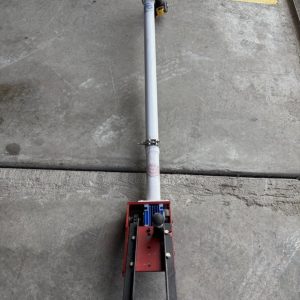
The Aircraft Electric Tow Bar – Mini Max Style provides convenient powered assistance for pilots, aircraft technicians, private owners, and aviation businesses that need dependable movement inside or around a hangar. Using an Aircraft Electric Tow Bar can simplify hangar positioning, reduce manual handling demands, and provide more predictable movement on suitable ground surfaces.
A used Electric Tow Bar for Aircraft can provide strong practical value when its drive system, frame, connections, controls, and included accessories remain in good condition. Before purchasing a Used Electric Aircraft Tow Bar, operators should confirm that the unit functions properly and can attach securely to the intended aircraft.
The Mini Max Aircraft Tow Bar configuration is particularly attractive to buyers who value compact storage, straightforward setup, portable operation, and practical maneuverability. An Aircraft Tow Bar with Drill provides powered movement, while the included Aircraft Tow Bar with Charger supports convenient battery maintenance between uses.
Because it occupies less space than many dedicated tugs, a get more info Portable Aircraft Tow Bar may be especially useful where hangar organization and storage capacity are important. When correctly selected and operated, this Powered Aircraft Tow Bar can help move an airplane smoothly through a hangar or across an appropriate paved surface.
When evaluating Aircraft Ground Handling Equipment, owners should compare towing capacity, aircraft connection, controls, storage size, portability, and total operating cost. For appropriate aircraft, the unit can combine the roles of Aircraft Hangar Tow Bar, Aircraft Moving Equipment, and portable Electric Aircraft Mover.
Key Benefits of a Mini Max Style Electric Tow Bar
The Aircraft Electric Tow Bar – Mini Max Style uses compact powered assistance to help an operator reposition a compatible aircraft with less manual effort than a conventional unpowered tow bar. The buyer should assess the complete operating environment because aircraft weight alone does not determine whether the tow bar is suitable.
Compact equipment can be especially useful in hangars where the aircraft must be positioned accurately between walls, doors, support columns, equipment, or neighboring airplanes. Controlled speed, clear communication, obstacle awareness, and appropriate assistance remain important even when using compact powered equipment.
Choosing an Electric Tow Bar for Aircraft
Using an Electric Tow Bar for Aircraft can improve convenience for pilots who need to position an airplane before departure or return it to storage after a flight. The equipment can be useful for private aircraft ownership, maintenance inspections, washing, fueling preparation, hangar organization, and temporary repositioning.
An electric tow bar provides controlled movement without creating engine exhaust, propeller wash, or unnecessary noise around the hangar. Safe towing requires confirming that the aircraft is ready to move and that no equipment, personnel, or obstacles interfere with the planned path.
Used Electric Aircraft Tow Bar Purchase Guide
A Used Electric Aircraft Tow Bar can provide excellent value when it has been operated carefully, stored correctly, and supplied with functioning powered accessories. The reported six-month period of Navion use may indicate relatively limited service, although buyers should still inspect and test the complete unit.
Buyers should request clear photographs of the frame, wheels, attachment assembly, powered drive, drill, charger, wiring, fasteners, handles, and areas showing wear. When an in-person inspection is not practical, a functional video can help confirm that the powered system operates under realistic conditions.
Benefits of a Mini Max Aircraft Tow Bar
A Mini Max Aircraft Tow Bar can be particularly useful for private pilots, individual hangar owners, flying clubs, and small aviation businesses. The practical value of the Mini Max style comes from combining powered assistance with direct operator control and a relatively small storage footprint.
A qualified person should review the attachment method and operating geometry before the tow bar is used on an unfamiliar airplane. Correct attachment selection is one of the most important factors in achieving reliable, controlled, and damage-free aircraft movement.
Benefits of an Aircraft Tow Bar with Drill
A powered drill allows the tow bar to generate controlled movement while keeping the overall system relatively compact and portable. Operators should confirm forward and reverse settings, torque control, battery charge, secure engagement, and comfortable access before towing.
Familiarity with the drill response, steering behavior, stopping distance, and reverse control can improve confidence and reduce handling errors. The drill should be stored according to its manufacturer’s recommendations and protected from moisture, impact, extreme heat, and unintentional activation.
Maintaining an Aircraft Tow Bar with Charger
A complete charging arrangement supports routine readiness by allowing the operator to restore battery capacity after use. A functional test can confirm that the battery is recognized, charging begins correctly, indicator lights operate, and the unit completes a normal charging cycle.
The charger and battery should be stored in a clean, dry, protected location where they cannot be damaged by tools, vehicles, fluids, or hangar traffic. Operators may label charging dates or keep a basic equipment log when the unit is shared among several users.
Using a Portable Aircraft Tow Bar
The compact unit can be relocated when hangar arrangements change, aircraft are moved to another location, or floor space is needed for maintenance. Handles and approved lifting points should be used where available, and the operator should avoid placing stress on the drill, attachment mechanism, wiring, or controls.
Organized storage improves readiness because operators can locate the tow bar, drill, charger, adapter, and hardware quickly when movement is required. An equipment log can record use, charging, maintenance, repairs, missing parts, and compatibility with different aircraft.
Choosing a Powered Aircraft Tow Bar
A Powered Aircraft Tow Bar is useful when an aircraft is difficult to move because of weight, tire resistance, hangar slope, limited grip, or frequent repositioning needs. A unit that appears powerful while unloaded may behave differently when attached to an aircraft on a slope, rough pavement, or high-resistance surface.
Operators should use slow speeds near hangar doors, walls, parked vehicles, tools, support stands, people, and other airplanes. A reliable stopping plan should include understanding drill release, reverse control, aircraft braking, chock placement, and the effect of any slope.
Choosing an Electric Airplane Tow Bar
An Electric Airplane Tow Bar may be especially beneficial for aircraft that must be positioned precisely because of limited door or wing clearance. Aircraft type alone is not enough to confirm fitment because landing-gear design, tow points, wheel pants, tire dimensions, steering limitations, and weight distribution can vary.
Preparing the path before attaching the tow bar can reduce delays and prevent the aircraft from becoming stopped in a difficult location. Regular practice in an open area can help a new user learn turning response, speed control, stopping distance, reverse behavior, and attachment movement.
Aircraft Ground Handling Equipment Selection
The best Aircraft Ground Handling Equipment is equipment that matches the aircraft and operating environment rather than simply offering the highest advertised power. The most suitable equipment provides reliable function, confirmed compatibility, manageable maintenance, safe control, and reasonable long-term ownership cost.
Keeping maintenance records can help owners monitor recurring wear and confirm when wheels, batteries, attachments, bearings, or drive components were serviced. Well-maintained ground-support equipment contributes to efficient hangar operations and reduces avoidable risk to aircraft and personnel.
Aircraft Hangar Tow Bar Operations
An Aircraft Hangar Tow Bar is most useful when the aircraft must pass through a limited door opening or park close to walls, equipment, or another airplane. The operator should confirm wingtip, tail, propeller, antenna, and control-surface clearances throughout the intended route.
The user should avoid distractions, phone use, conversations, and unnecessary activity while the aircraft is moving. Any damage, unusual behavior, weak battery performance, slipping, or attachment concern should be documented before the next operation.
Choosing Aircraft Moving Equipment
Compact moving equipment can be valuable for private aircraft that are stored in confined spaces or repositioned frequently for flights and maintenance. A unit that performs well under ideal conditions may have reduced capability when traction is poor or the aircraft must cross a threshold or incline.
The landing gear and steering system should be handled within published limitations to prevent excessive rotation, binding, or structural stress. The tow equipment should be removed from service if it shows cracks, severe corrosion, bent structure, damaged controls, unreliable power, or an insecure aircraft connection.
Benefits of an Electric Aircraft Mover
An Electric Aircraft Mover can offer lower storage demands and simpler operation for owners who do not need commercial towing capacity. Operators should recognize signs of overload, including drill strain, repeated stopping, wheel slip, excessive heat, slow movement, unusual noise, or attachment distortion.
A compact electric mover can be prepared quickly for occasional use when the battery is charged and all components are stored together. Long-term reliability depends on maintaining both the mechanical towing assembly and the removable electrical power equipment.
Aircraft Mobility Equipment Applications
Aircraft Mobility Equipment helps owners control how airplanes are positioned, stored, accessed, maintained, and prepared within aviation facilities. A Mini Max-style tow bar can be particularly useful where the operator values portability and direct control more than long-distance towing or commercial capacity.
Shared hangars may establish an authorization list so only trained users operate the powered tow bar. Periodic reassessment ensures that the mobility solution continues to match the actual aircraft and operating environment.
Light Aircraft Tow Bar Benefits
The term Light Aircraft Tow Bar describes a broad category, so buyers should not assume that every compact unit fits every general aviation airplane. Proper fit protects the landing gear, steering stops, fairings, tires, brakes, and towing equipment during movement.
Light aircraft may still be difficult to move when parked on slopes, stored for long periods, fitted with low tires, or affected by brake resistance. Any uncertainty about capacity, condition, compatibility, or operation should be resolved before the aircraft is attached.
Routine Care for Aircraft Ground Equipment
A regular inspection routine supports dependable performance, protects resale value, and gives operators confidence during hangar movement. Maintenance should be based on actual condition and operation rather than waiting for the equipment to stop functioning.
- Review the tow bar for cracks, bending, corrosion, loose bolts, damaged wheels, worn adapters, drive problems, and insecure connections before operation.
- Verify adequate battery charge, correct drill installation, smooth powered movement, functional reverse, predictable trigger control, and normal charging performance.
- Clean and store the tow bar, drill, charger, adapters, pins, and hardware in a dry, organized, protected location after operation.
Buying the Aircraft Electric Tow Bar – Mini Max Style
The Aircraft Electric Tow Bar – Mini Max Style can be an excellent choice for compatible light-aircraft owners who need portable powered assistance for routine hangar positioning. The unit should be judged according to complete operating readiness rather than appearance or purchase price alone.
Whether operators are sourcing an Electric Aircraft Mover, Aircraft Mobility Equipment, or Light Aircraft Tow Bar, safe attachment, adequate capacity, and responsible maintenance remain essential. With correct fitment, careful operation, proper battery care, and routine inspection, the tow bar can provide convenient aircraft movement for many future hangar operations.